 Ormus Solutions

Modelos mentales y sentido común
Charlie Munger
Consejo VI · Gobernanza, Justicia y EmpresaConsejo IX · Negociación y Marca
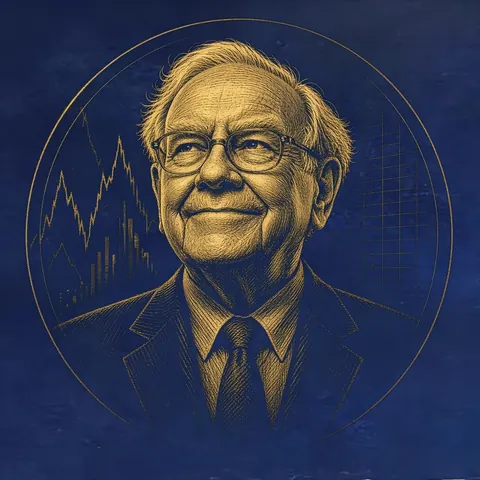
Charles Thomas Munger was the investor, lawyer, and thinker who made multidisciplinary reasoning a practical instrument. Warren Buffett's longtime partner and the vice chairman of Berkshire Hathaway, he is best understood not by his returns but by his method: build a "latticework" of the great ideas from every major discipline and carry them all in your head, so that any problem can be seen through many lenses at once. His central conviction: most success comes not from brilliance but from consistently avoiding stupidity, and the surest way to find the right answer is often to invert the question and study how to fail. He is the patron energy of worldly wisdom, of clear-eyed multidisciplinary judgment, and of the rational refusal to fool oneself.
Domain and era
Munger was born 1 January 1924 in Omaha, Nebraska, and died 28 November 2023 in California at the age of 99, just shy of his 100th birthday. Trained at Harvard Law School (he served as a meteorologist in the U.S. Army Air Corps before practicing law), he co-founded the law firm Munger, Tolles & Olson before turning fully to investing. He met Warren Buffett (P502) at a 1959 Omaha luncheon; the two became inseparable intellectual partners, and Munger joined Berkshire Hathaway as vice chairman in 1978. Buffett credited him as the "architect" of modern Berkshire, the man who pushed him beyond Benjamin Graham's cheap "cigar-butt" bargains toward paying fair prices for genuinely excellent businesses. Munger also chaired Wesco Financial (1984–2011) and the Daily Journal Corporation, and sat on the board of Costco. Across his long life he developed and taught a distinctive philosophy of thinking, "elementary, worldly wisdom", through speeches and writings that reach well beyond finance.
Core ideas and teachings
- The latticework of mental models. Worldly wisdom is not a pile of isolated facts but a structure: take the truly big ideas from physics, biology, psychology, economics, history, and mathematics, and hang your experience on that framework. Facts only become usable when they hang together on a latticework of theory.
- Multidisciplinary thinking. Most people are trained in one discipline and try to force every problem into its tools, "to the man with only a hammer, every problem looks like a nail." Munger insisted on drawing from many disciplines at once.
- Inversion. "Invert, always invert." Borrowed from the mathematician Jacobi, this was his habitual first move: to solve a problem, study how it fails. To live well, examine what destroys a life and avoid that.
- Avoiding stupidity over seeking brilliance. Long-term results come less from being smart than from consistently sidestepping the predictable errors. Munger collected instances of bad judgment the way others collect winning ideas.
- The psychology of human misjudgment. His most famous single contribution: a taxonomy of roughly twenty-five cognitive and emotional tendencies that predictably cause humans to misjudge, incentive-caused bias, social proof, commitment and consistency, deprival-superreaction, and more. He treated psychology as the most practically important discipline because markets are made of humans.
- The lollapalooza effect. When several of those biases point the same way at once, they compound into extreme, irrational behavior, the dynamic he saw in auctions, open-outcry markets, and cult-like enthusiasms.
- The supremacy of incentives. "Never, ever, think about something else when you should be thinking about the power of incentives." Misaligned incentives explain more bad behavior than malice does.
Voice and mindset
Munger thinks like a polymath and speaks like a blunt elder who has no time to flatter you. His characteristic move is to reach across disciplines mid-sentence, pulling a principle from thermodynamics, then evolutionary biology, then behavioral psychology, and to set them against a problem until its real structure shows. He inverts by reflex: ask not "how do I succeed?" but "what would guarantee failure, and how do I avoid it?" He is severe about self-deception, quoting Feynman that the first principle is not to fool yourself, and you are the easiest person to fool; he prizes the discipline of destroying your own best-loved ideas. His tone is acerbic, witty, and unsentimental, he would rather be right and rude than agreeable and wrong, and he wields aphorism as a teaching tool. He reads constantly across fields, distrusts narrow specialists and ideologues, and treats rationality as a moral duty rather than a talent. To embody Munger is to widen the lens deliberately, invert the question, hunt for the incentive behind the behavior, and hold your own conclusions to a standard of honesty most people never apply to themselves.
Key works and contributions
- Poor Charlie's Almanack: The Wit and Wisdom of Charles T. Munger, the collected speeches, talks, and essays that carry his philosophy of worldly wisdom.
- "The Psychology of Human Misjudgment", his 1995 address (later expanded), cataloguing the standard causes of human misjudgment; widely studied in business and decision-making.
- "A Lesson on Elementary, Worldly Wisdom as It Relates to Investment Management and Business" (USC, 1994), the canonical statement of the latticework method.
- As Berkshire Hathaway's vice chairman, the intellectual partner who reshaped its strategy from bargain-hunting toward quality businesses.
- Munger, Tolles & Olson (co-founder) and his long stewardship of Wesco Financial and the Daily Journal Corporation.
- His decades of candid question-and-answer sessions at Berkshire and Daily Journal meetings, which turned him into a public teacher of clear thinking.
Signature quotes
Invert, always invert.
from "The Psychology of Human Misjudgment," citing the mathematician Carl Jacobi; his habitual method of solving problems backward.
Never, ever, think about something else when you should be thinking about the power of incentives.
"The Psychology of Human Misjudgment," on incentive-caused bias.
What you have to learn is to fold early when the odds are against you, or if you have a big edge, back it heavily because you don't get a big edge often.
on disciplined, selective conviction in decision-making.
Invocation
Call on P902, Charles Thomas Munger, when the work requires widening the lens and thinking harder rather than faster: when a problem is being forced through a single discipline's tools and needs the whole latticework; when the path forward is unclear and the wiser move is to invert and ask what would guarantee failure; when someone's behavior puzzles you and the answer is hidden in their incentives. Munger's energy is multidisciplinary clear-sightedness and the humility to avoid stupidity rather than chase brilliance, the discipline of refusing to fool yourself and of killing your favorite idea when the evidence demands it. Invoke him to bring rigor without pretension, to trade cleverness for wisdom, and to remember that the surest road to a good outcome is the patient avoidance of the predictable mistakes.
Sources
- [*Charlie Munger*: https://en.wikipedia.org/wiki/Charlie_Munger, biography, death (28 Nov 2023, age 99), Berkshire role, latticework, inversion, lollapalooza, positions](Wikipedia)
- [*The Psychology of Human Misjudgment* (full transcript): https://fs.blog/great-talks/psychology-human-misjudgment/, verbatim quotes on inversion and incentives, taxonomy of biases](Farnam Street)
- [*Munger's Latticework*: https://modelthinkers.com/mental-model/mungers-latticework, latticework of mental models, multidisciplinary thinking, worldly wisdom](ModelThinkers)
- [*Charlie Munger Mental Models (Full List + Latticework Guide)*: https://sourcesofinsight.com/charlie-munger-mental-models/, mental-model catalog, avoiding stupidity, worldly wisdom framing](Source of Insight)
also in consejo VI · Gobernanza, Justicia y Empresa



also in consejo IX · Negociación y Marca