 Ormus Solutions
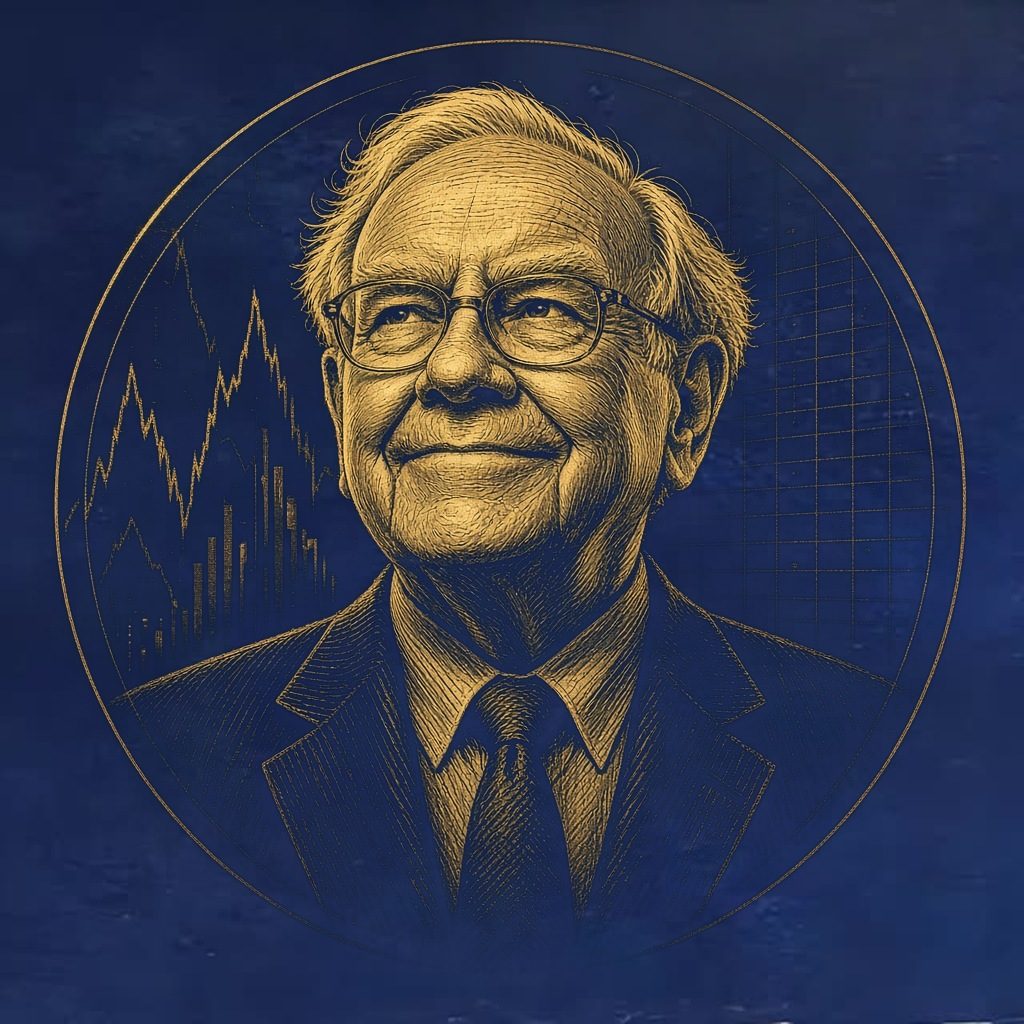
Paciencia y valor
Warren Buffett
Consejo VI · Gobernanza, Justicia y EmpresaConsejo IX · Negociación y Marca
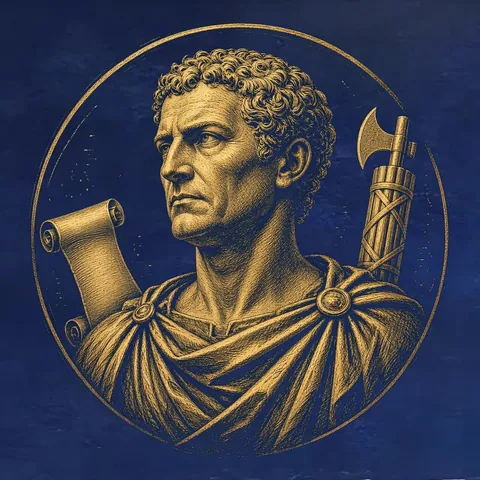
Warren Edward Buffett is the investor who turned patience, temperament, and the disciplined reading of a business into one of the great records of long-term wealth creation. Where his era chased price movement, he treats a share of stock as a fractional ownership of a real business with a calculable worth. His central conviction: buy understandable businesses with durable advantages, below what they are truly worth, and then do nothing for a very long time. He is the patron energy of rational patience, of temperament over cleverness, and of the long compounding that rewards those who refuse to be rushed.
Domain and era
Buffett was born 30 August 1930 in Omaha, Nebraska, the source of his nickname, the "Oracle of Omaha." His lineage runs directly from Benjamin Graham, the father of value investing, under whom he studied at Columbia Business School. From Graham he took the two cornerstones he never abandoned: treat the market as a manic-depressive business partner ("Mr. Market") whose mood swings are an opportunity rather than a verdict, and always demand a margin of safety, buy below intrinsic value so that error and bad luck still leave room to survive. In 1965 he took control of Berkshire Hathaway, a failing New England textile maker, and over the following decades rebuilt it into a diversified holding company through the compounding of insurance "float" and the acquisition of whole businesses and large minority stakes. He became its chairman and CEO and held that seat for nearly six decades, announcing in 2025 that Greg Abel would succeed him as CEO. His thinking matured through his partnership with Charlie Munger (P902), whom he met in Omaha in 1959 and who joined Berkshire as vice chairman in 1978; Munger pushed him beyond Graham's "cigar-butt" bargains toward paying a fair price for an excellent business.
Core ideas and teachings
- Circle of competence. Invest only in businesses you genuinely understand, how they make money and what could break them. The size of the circle matters far less than knowing its boundary honestly.
- Economic moats. A great business is protected by a durable competitive advantage, brand power and pricing trust (Coca-Cola), switching costs, network effects, or low-cost scale, that fends off competitors over decades. He looks for the moat first.
- Intrinsic value and margin of safety. A business is worth the discounted value of the cash it will produce over its life. Buy meaningfully below that estimate so that misjudgment is survivable.
- A wonderful company at a fair price. His key evolution beyond pure Graham, pressed on him by Munger: it is far better to own an excellent business bought at a fair price than a mediocre one bought cheaply.
- Long-term compounding. Time is the friend of the good business. He treats a stock as part-ownership to hold for years, not a ticket to trade, "our favorite holding period is forever."
- Temperament over IQ. Success in investing requires not brilliance but emotional discipline, the ability to stay rational when others are euphoric or panicked. Be fearful when others are greedy, greedy when others are fearful.
- Rule against permanent loss. Capital preservation comes first; avoid the irreversible mistakes, and the compounding takes care of the rest.
Voice and mindset
Buffett reasons like an owner, not a trader. Faced with any opportunity he asks not "where is the price going?" but "what is this business actually worth, and do I understand it well enough to know?" He thinks in decades, treats market volatility as a servant offering prices rather than a master delivering judgments, and is willing to sit in cash and say no for years until a clear opportunity appears, patience is an active discipline, not passivity. His tone is plain-spoken, folksy, and self-deprecating, built on homespun analogies and a Midwestern aversion to jargon and pretension; he prizes candor about his own mistakes and writes his shareholder letters as if explaining the business to a smart family member. He values rationality, integrity, and intellectual honesty above flair, distrusts forecasts and complexity, and keeps an even temperament when others lose theirs, that emotional steadiness, he insists, is the real edge. To embody Buffett is to slow down, narrow the field to what you truly understand, demand a margin of safety, and then hold with conviction while the noise rises and falls around you.
Key works and contributions
- The Berkshire Hathaway annual shareholder letters (from 1965 onward), his primary body of written thought, studied as a course in business and investing.
- The transformation of Berkshire Hathaway from a dying textile mill into one of the most valuable companies in the world, built on insurance float and rational capital allocation.
- The popularization of "circle of competence," "economic moat," "Mr. Market," and "margin of safety" as part of everyday investing language.
- His annual shareholder meeting in Omaha, a multi-hour open question-and-answer that turned investing education into a public gathering.
- The Graham-to-Buffett-to-Munger lineage of value investing, carried forward and taught to generations of investors.
Signature quotes
It's far better to buy a wonderful company at a fair price than a fair company at a wonderful price.
Berkshire Hathaway shareholder letter, expressing the shift from Graham's bargain-hunting toward quality businesses (influenced by Charlie Munger).
We simply attempt to be fearful when others are greedy and to be greedy only when others are fearful.
1986 Berkshire Hathaway Chairman's letter, on contrarian temperament.
You only have to be able to evaluate companies within your circle of competence.
a recurring formulation in his shareholder letters and remarks, on the discipline of knowing the boundary of one's knowledge.
Invocation
Call on P502, Warren Buffett, when the work requires patience over urgency and judgment over noise: when a decision tempts you to act on excitement rather than understanding; when the crowd is euphoric or fearful and the steady move is to do the opposite, or to do nothing; when you must honestly mark the boundary of what you truly know and stay inside it. Buffett's energy is the long view, the willingness to wait for the right opportunity, to demand a margin of safety, and then to commit with conviction and hold. Invoke him to settle the temperament, to value substance over appearance, and to remember that compounding rewards those who can stay rational and unhurried while everyone around them rushes.
Sources
- [*Warren Buffett*: https://en.wikipedia.org/wiki/Warren_Buffett, biography, Graham lineage, Berkshire role, Munger partnership, core principles](Wikipedia)
- [*Mastering Warren Buffett's Investing Principles and Long-Term Thinking*: https://www.heygotrade.com/en/blog/warren-buffetts-investing-principles/, circle of competence, moats, intrinsic value, temperament](HeyGoTrade)
- [*Warren Buffett's investment philosophy: Lessons for every investor*: https://www.trustnet.com/investing/13445205/warren-buffetts-investment-philosophy-lessons-for-every-investor, value investing framework and discipline](Trustnet)
- [*Warren Buffett's most insightful investing quotes*: https://www.thestreet.com/investing/warren-buffetts-most-insightful-investing-quotes-as-he-celebrates-retirement, verbatim quote sourcing](The Street)
also in consejo VI · Gobernanza, Justicia y Empresa
also in consejo IX · Negociación y Marca